Image Notice: Manufacturer stock photos and various web sources. Non-commercial reference use. Image removal requests via contact form.
Reference Note: JDM (Japan Domestic Market) references are listed where found, allowing you to identify both global and regional model variants.
Samurai First Generation (2004-2008)
The Seiko Samurai was introduced in 2004, earning its nickname from the sword-shaped hands that recall the silhouette of a katana.
First-generation models use a 42mm case with Hardlex mineral crystal, screw-down crown at 3 o'clock, and 200m water resistance. The JDM titanium versions are powered by the 21-jewel 7S25 caliber, while the international stainless steel models use the 23-jewel 7S35 caliber. Both are automatics with sharp downward-sloping lugs, but neither offers hacking or hand-winding (a notable quirk that disappears in later generations).
This generation predates the Prospex line consolidation and so carries no Prospex "X" logo on the dial. Three titanium references launched in Japan in black, blue, and orange, followed by stainless steel international variants and a series of Thailand-exclusive "Ninja" colourways. Today the original SBDA titanium trio and the Ninja LEs are the most sought-after.
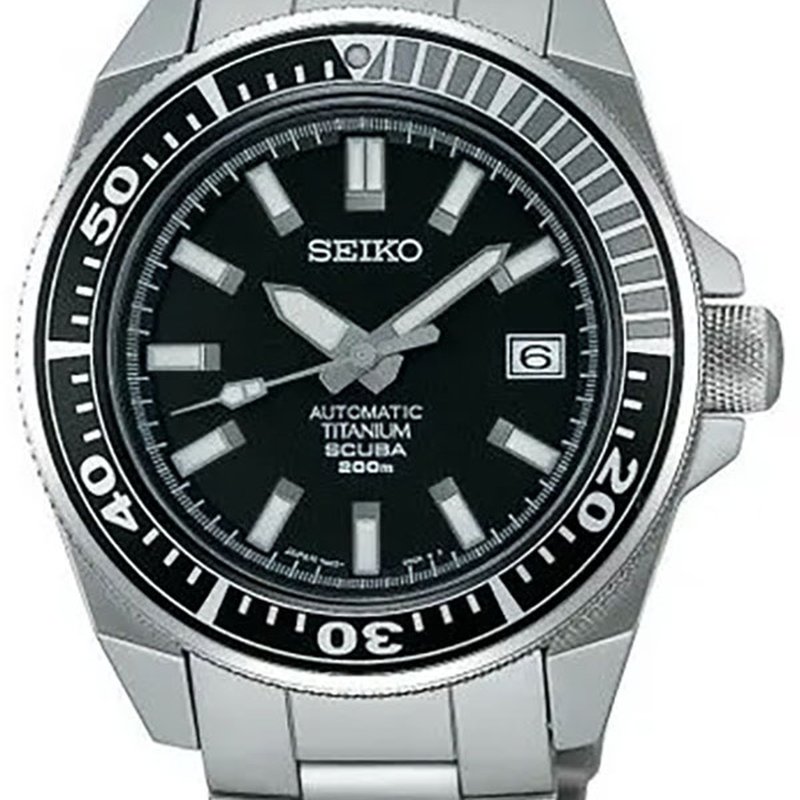
Black Titanium Samurai
SBDA001
Black Sunburst Titanium - Cal. 7S25
Year: 2004
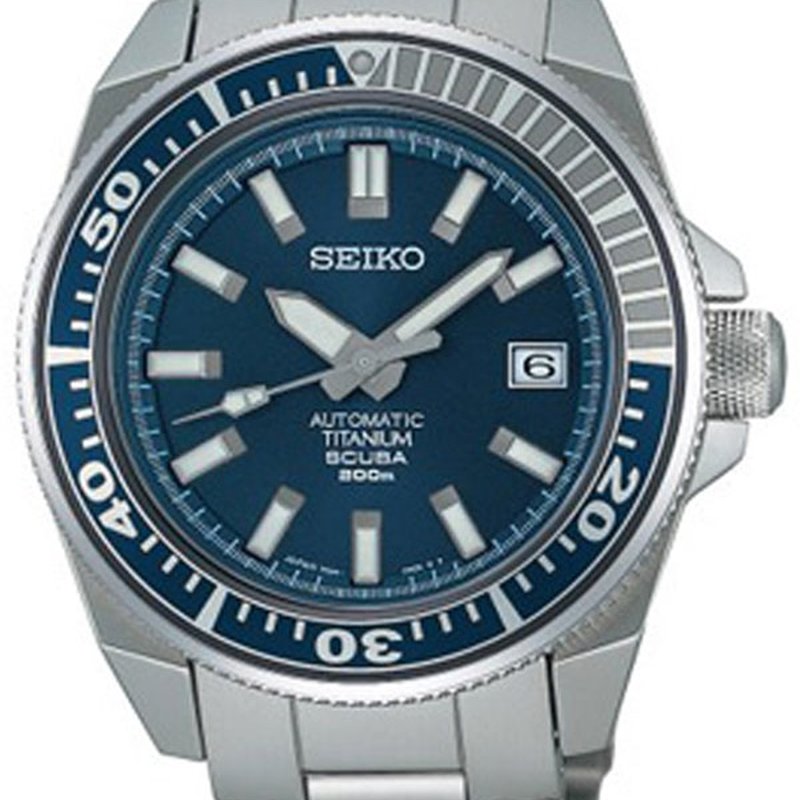
Blue Titanium Samurai
SBDA003
Blue Sunburst Titanium - Cal. 7S25
Year: 2004
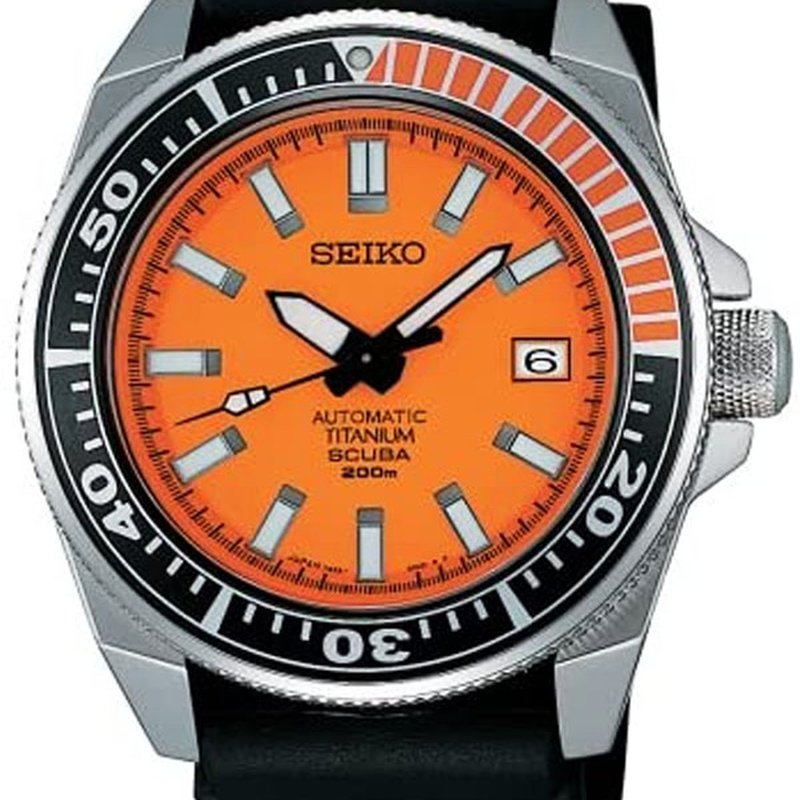
Orange Titanium Samurai
SBDA005
Orange Sunburst Titanium - Cal. 7S25
Year: 2004
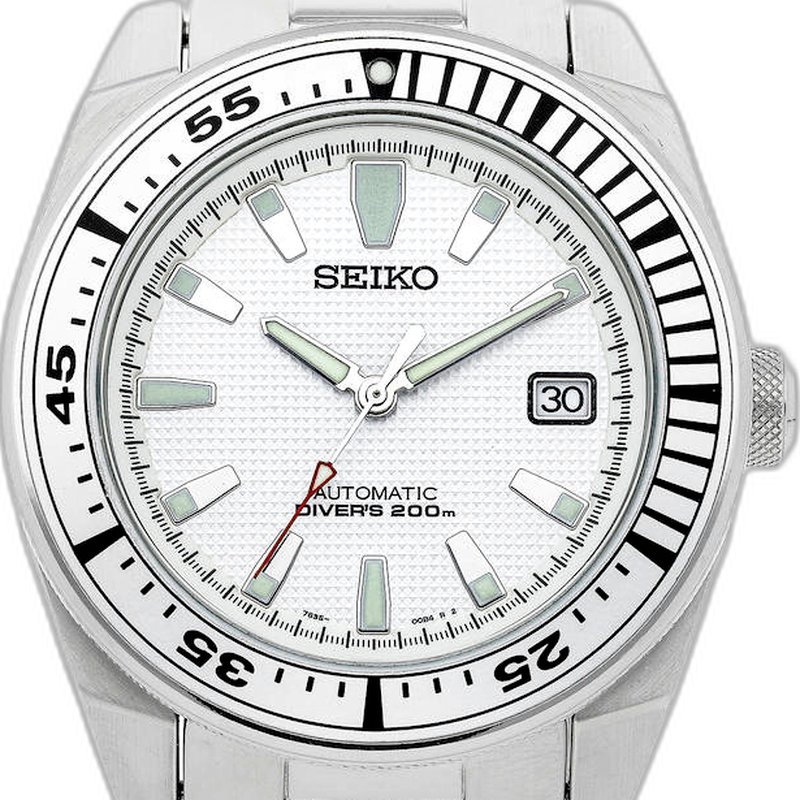
White Steel Samurai
SNM009
White Waffle Stainless - Cal. 7S35
Year: 2004
International market stainless steel release.
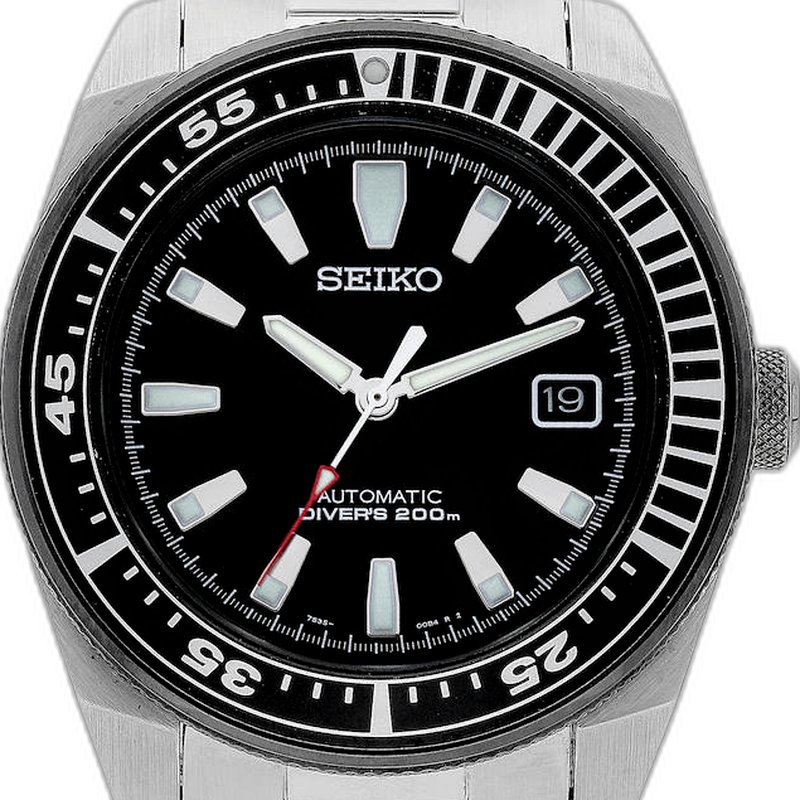
Black Steel Samurai
SNM011
Black Waffle Stainless - Cal. 7S35
Year: 2004
International market stainless steel release.
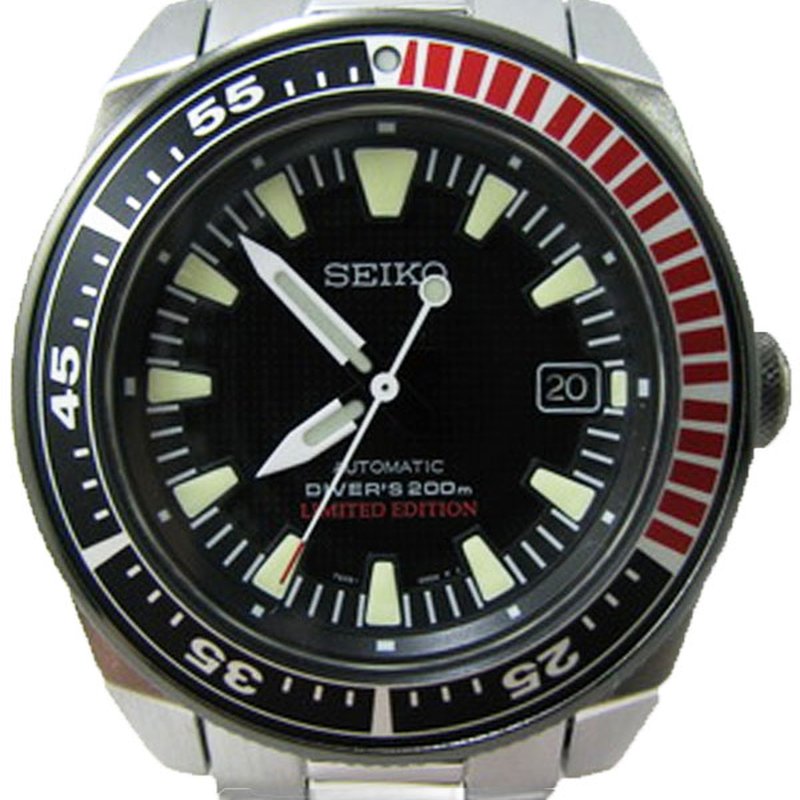
Black Ninja Samurai
SNM015
Black Ninja - Cal. 7S35
Year: 2005
Limited Edition - 500 pieces (Thailand)
Very rare. Individually numbered.
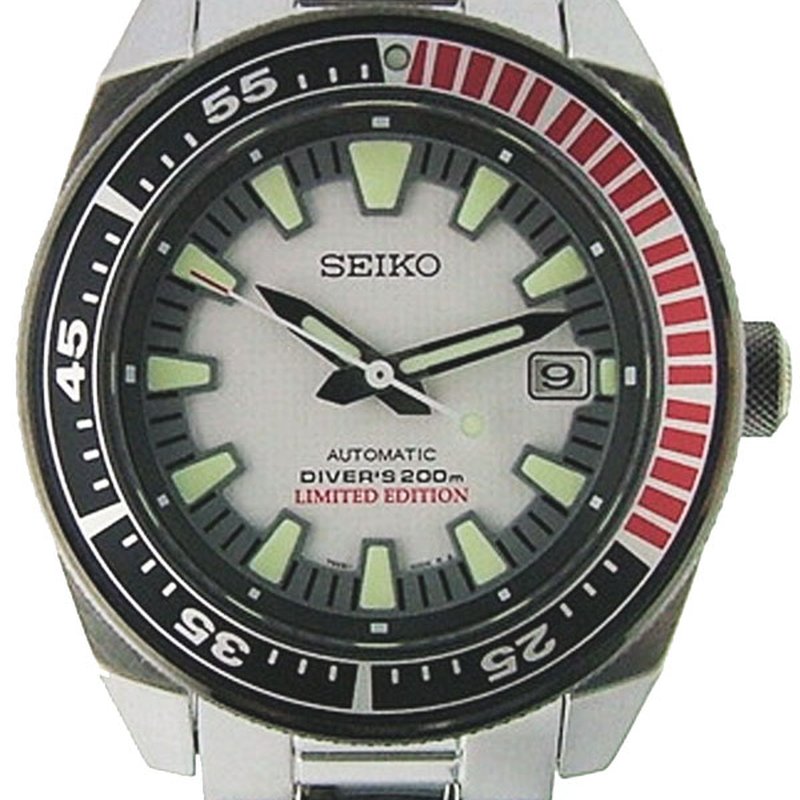
White Ninja Samurai
SNM017
White Ninja - Cal. 7S35
Year: 2005
Limited Edition - 500 pieces (Thailand)
Very rare. Individually numbered.
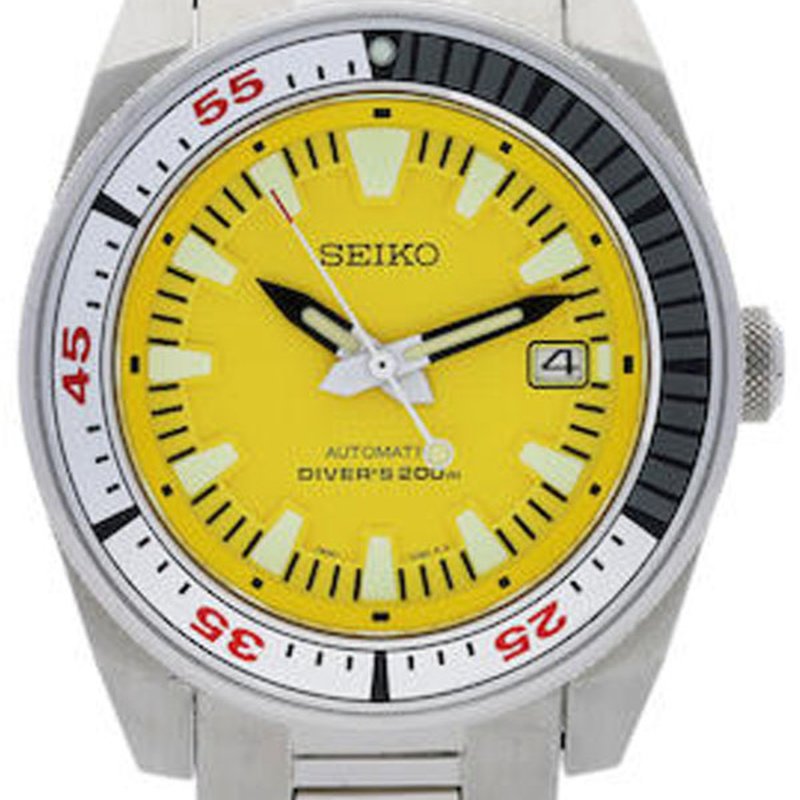
Yellow Ninja Samurai
SNM019
Yellow Ninja - Cal. 7S35
Year: 2005
Limited Edition - 300 pieces (Thailand)
Very rare. Individually numbered; the Yellow and Orange are the hardest of the four Ninjas to find.
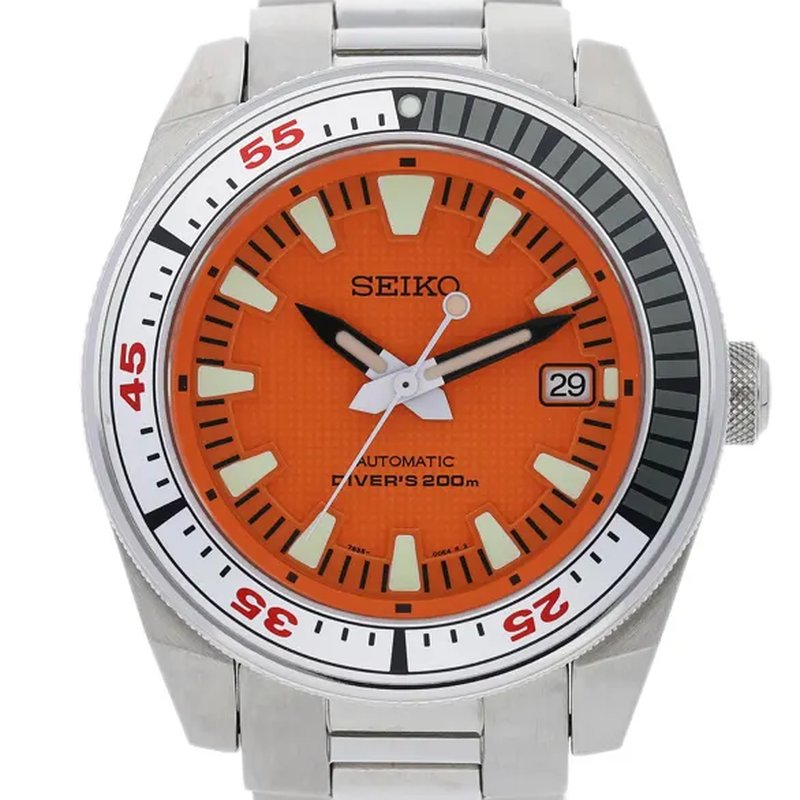
Orange Ninja Samurai
SNM021
Orange Ninja - Cal. 7S35
Year: 2005
Limited Edition - 300 pieces (Thailand)
Very rare. Individually numbered; the Yellow and Orange are the hardest of the four Ninjas to find.
Samurai Second Generation (2017-2020)
After nearly a decade of silence, the Samurai returned in 2017 with a substantial overhaul. The case grows to 43.8mm and 13.4mm thick, gains a more aggressive angular profile, and adopts the Prospex "X" logo. The 7S25/7S35 of Gen 1 is replaced by the 4R35, still a 23-jewel automatic at 21,600 vph and 41h reserve, but now with hacking and manual winding.
The standard arrow-style hands, borrowed from the Seiko Monster line, replace the original swords (purists were divided). The screw-down crown at 3 o'clock carries over from Gen 1, and Hardlex remains across most of the range; sapphire appears only on selected limited editions.
This generation expanded the catalog rapidly with PADI, Save the Ocean, Zimbe, Dawn Grey, and various JDM colour variants. Several core references (e.g. SRPB51 → SRPF03, SRPB99 → SRPF09) were silently re-numbered partway through production with no mechanical changes.
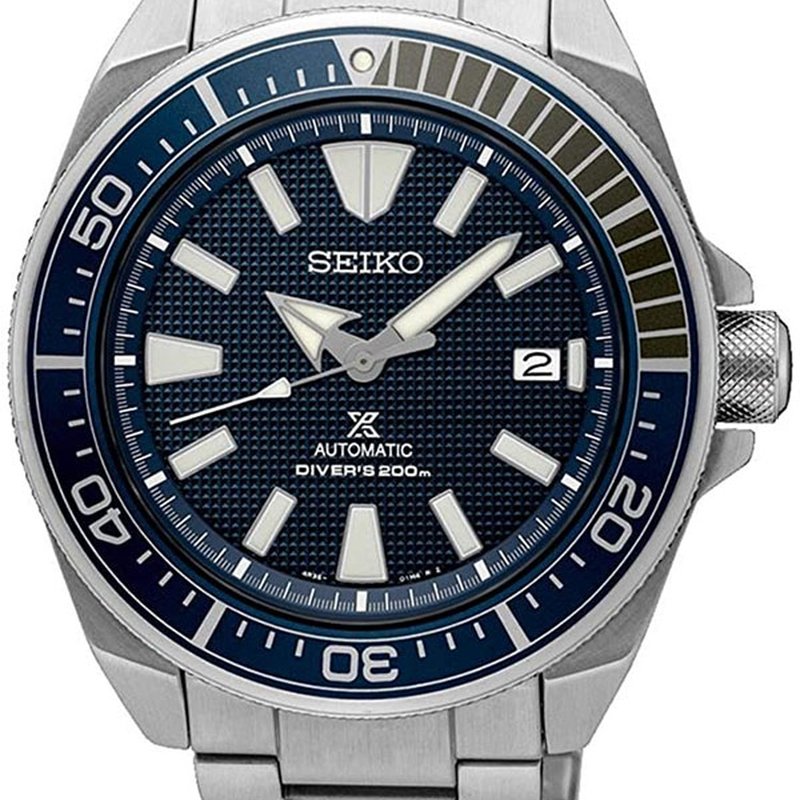
Blue Samurai
SRPB49
Blue Dial / Blue-Grey Bezel - Cal. 4R35
Year: 2017
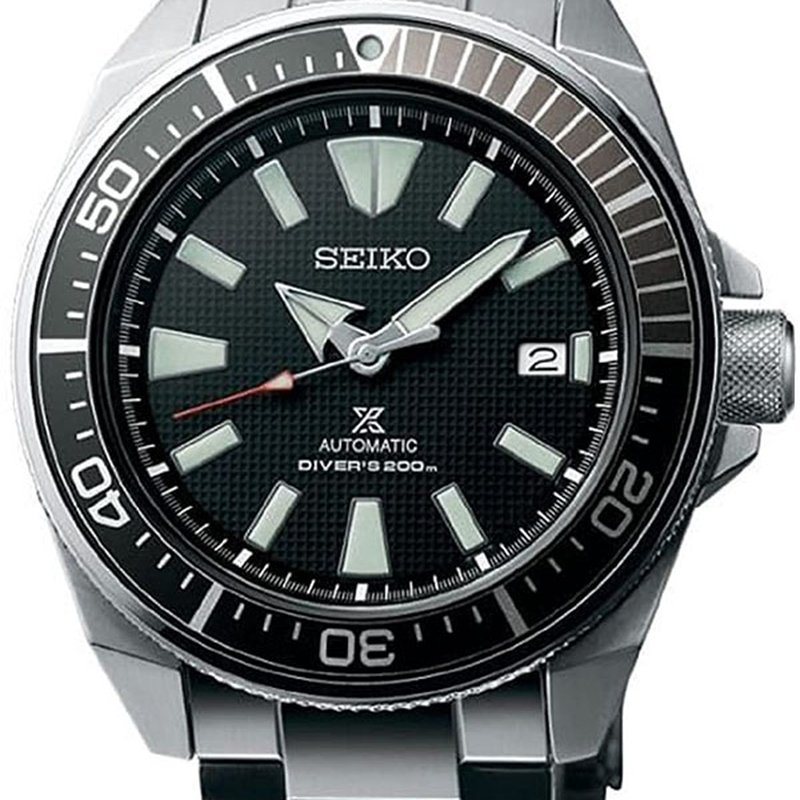
Black Samurai
SRPB51 / SBDY009
Black Dial / Black-Grey Bezel - Cal. 4R35
Year: 2017
Later re-numbered as SRPF03 with no mechanical changes.
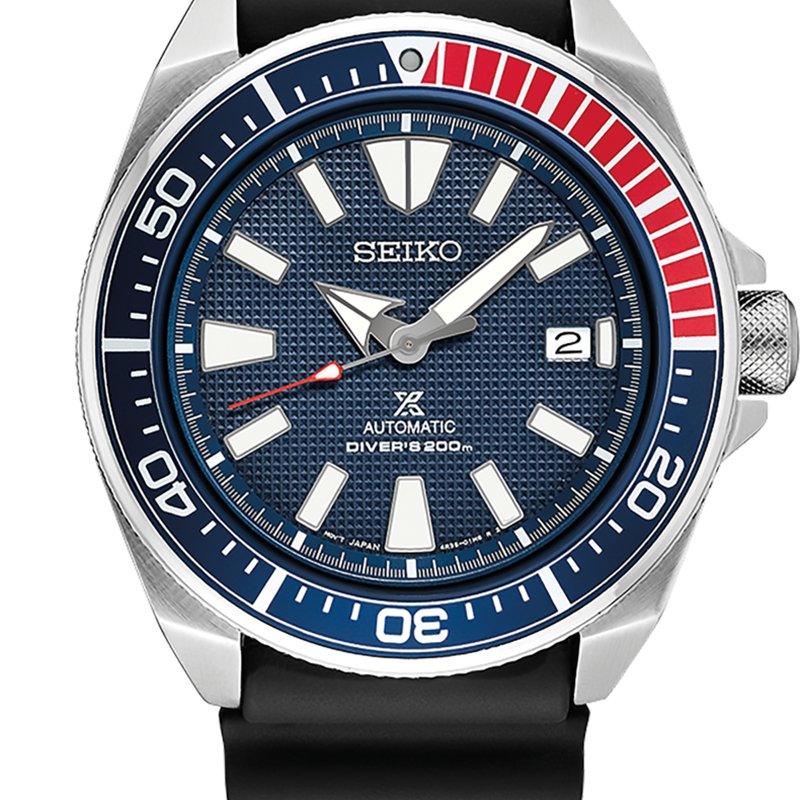
Pepsi Samurai
SRPB53
Black Dial / Pepsi Bezel - Cal. 4R35
Year: 2017
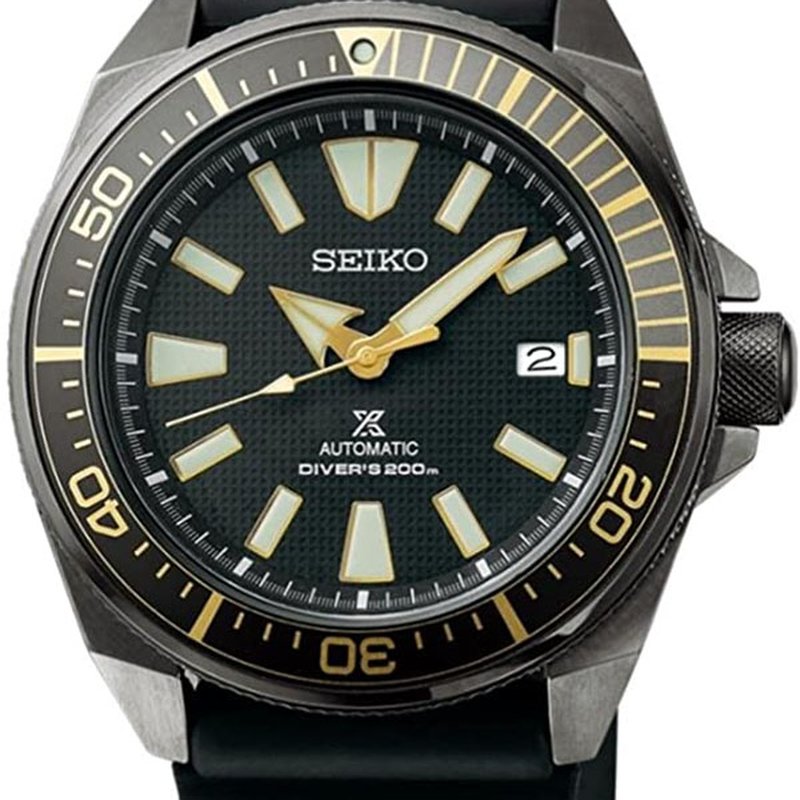
Black Gold Samurai
SRPB55
Black-Coated Case / Gold Accents - Cal. 4R35
Year: 2017
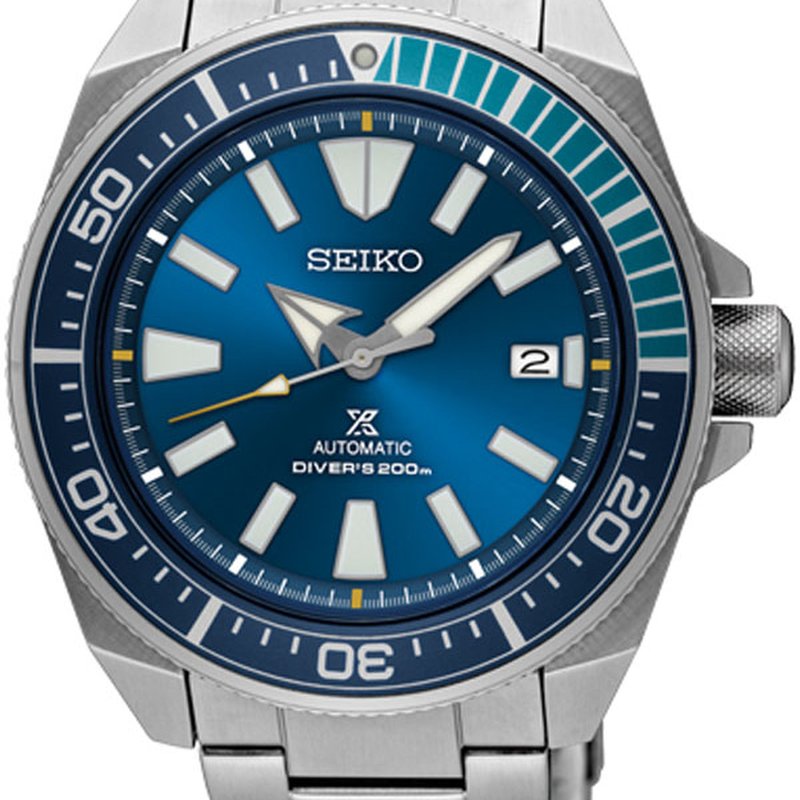
Blue Lagoon Samurai
SRPB09
Blue Sunray / Yellow Accents - Cal. 4R35
Year: 2017
Limited Edition - 6,000 pieces
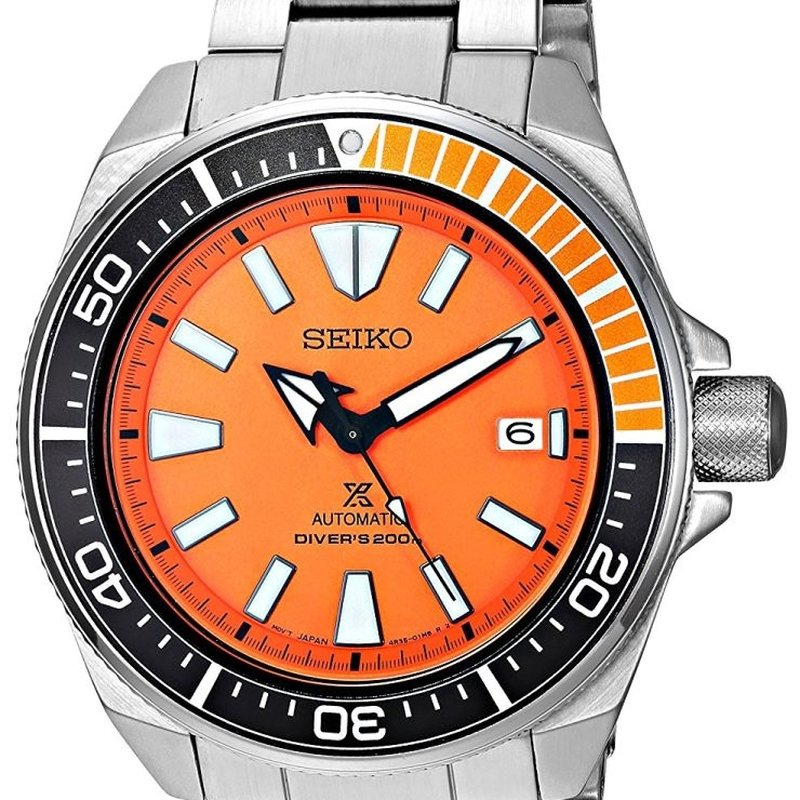
Orange Samurai
SRPB97 / SRPC07
Orange Dial / Black Bezel - Cal. 4R35
Year: 2017
SRPB97 was Amazon-exclusive on rubber; SRPC07 is the non-exclusive bracelet version.
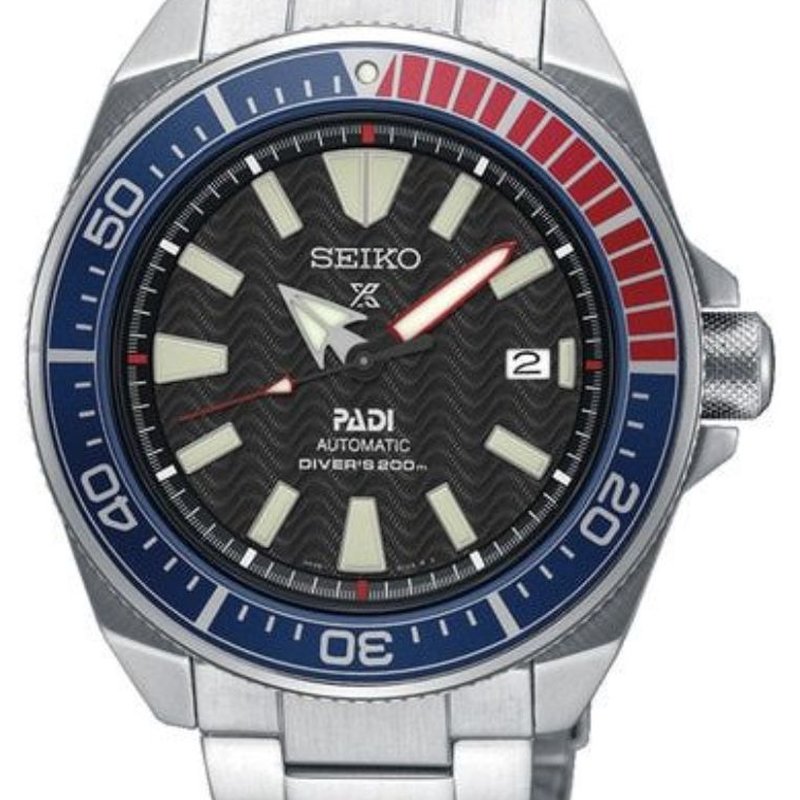
PADI Samurai
SRPB99 / SRPF09
Wave Dial / Pepsi Bezel - Cal. 4R35
Year: 2017
PADI Special Edition
Later re-numbered as SRPF09 with no mechanical changes.
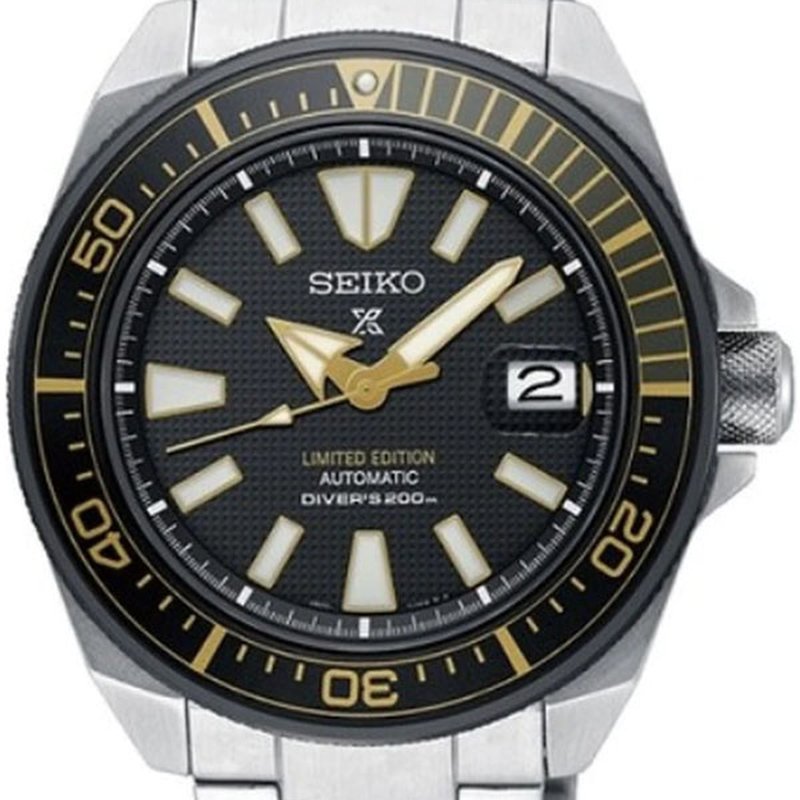
Zimbe No.6 / STO Samurai
SRPC43
First Save the Ocean Samurai - Cal. 4R35
Year: 2017
Limited Edition - 1,500 pieces (Thailand)
Sapphire crystal upgrade. First Zimbe Samurai.
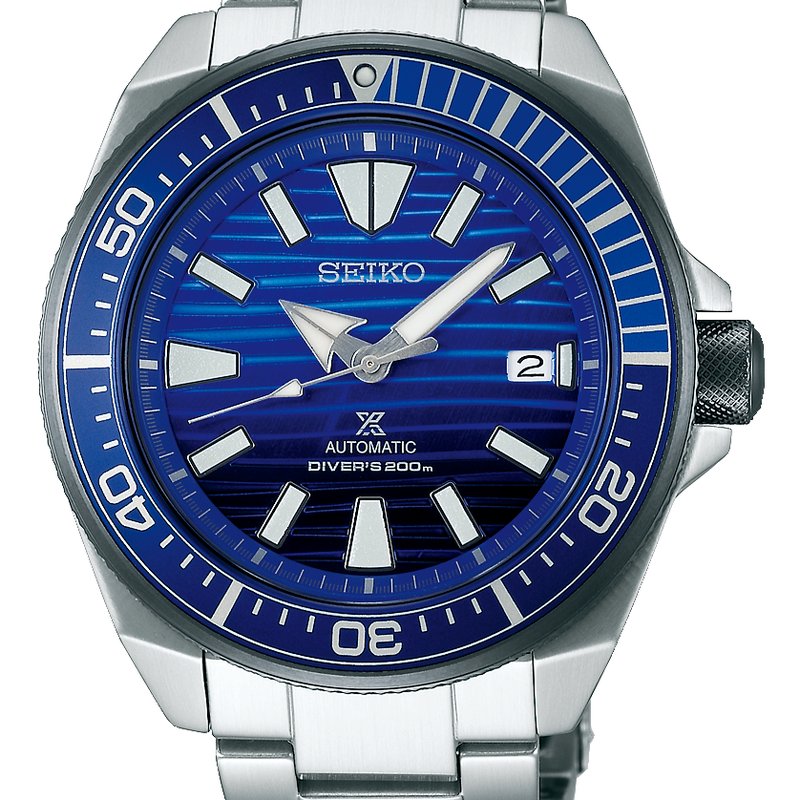
Save the Ocean Samurai
SRPC93
Gradient Blue Wave Dial - Cal. 4R35
Year: 2018
Save the Ocean Special Edition
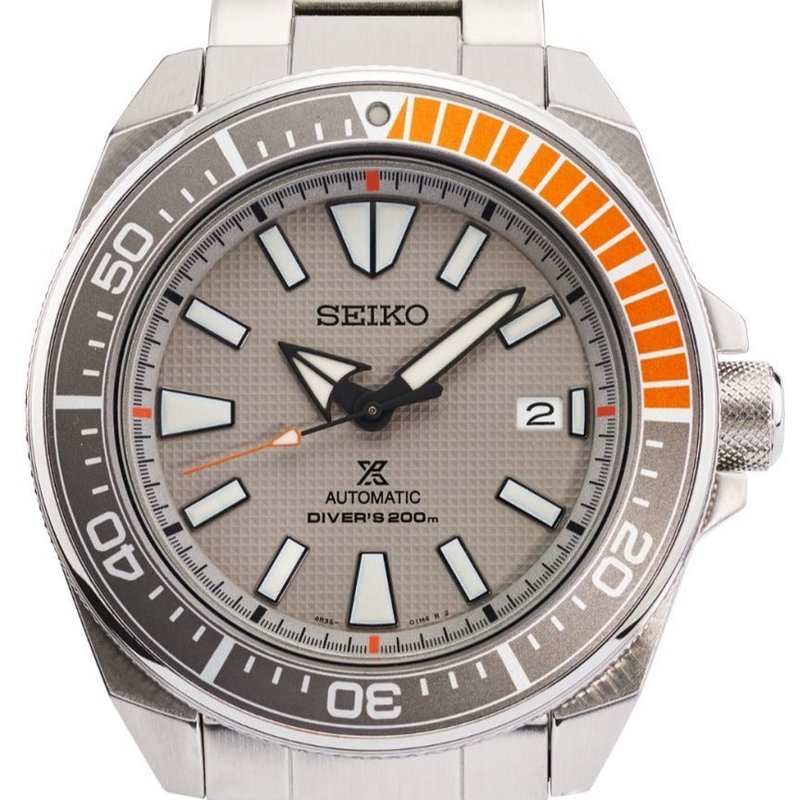
Dawn Grey Samurai
SRPD03
Grey Clou-de-Paris Dial - Cal. 4R35
Year: 2018
Limited Edition - 2,018 pieces (Europe)
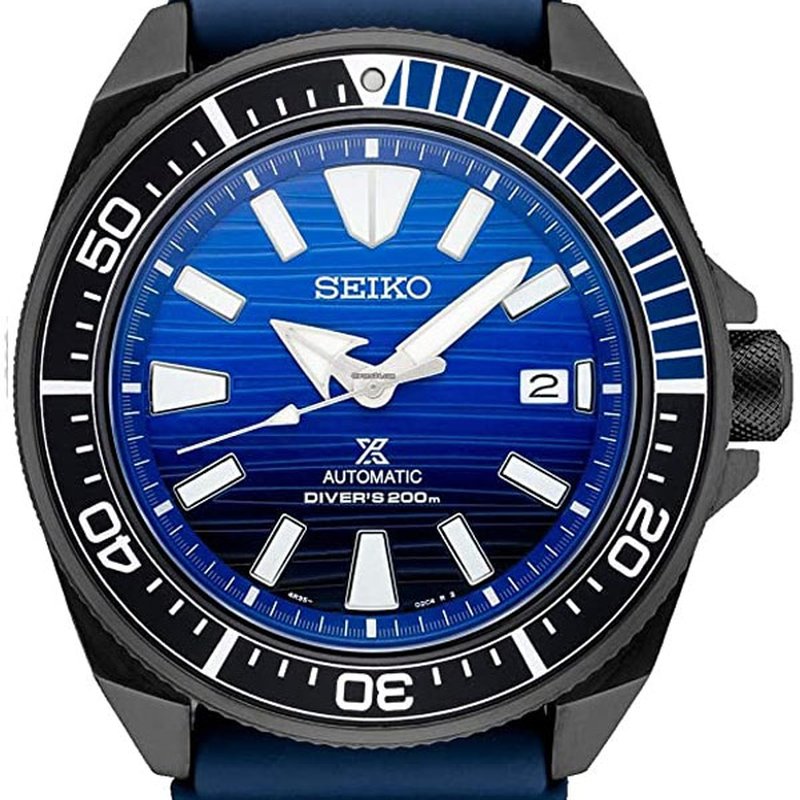
Save the Ocean Black Samurai
SRPD09 / SBDY025
Black PVD / Gradient Wave Dial - Cal. 4R35
Year: 2018
Save the Ocean Special Edition
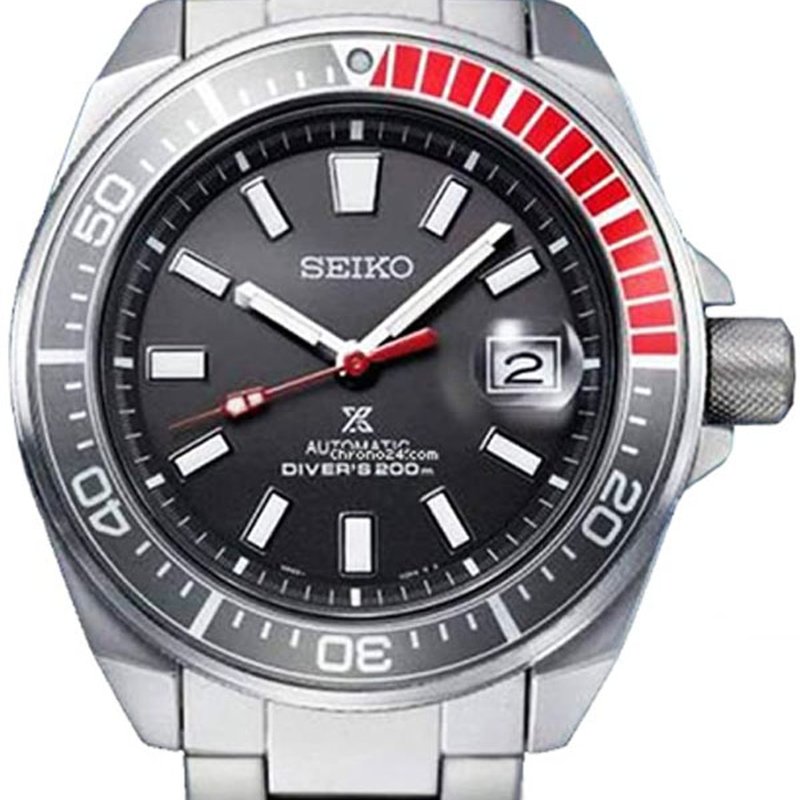
Zimbe No.9 Samurai
SRPD13
Reflective Grey / Red Accents - Cal. 4R35
Year: 2018
Limited Edition - 1,300 pieces (Thailand)
Unlike standard Samurais, the SRPD13 uses flat baton hands and simple stick markers instead of the trademark arrow handset and faceted applied indices.
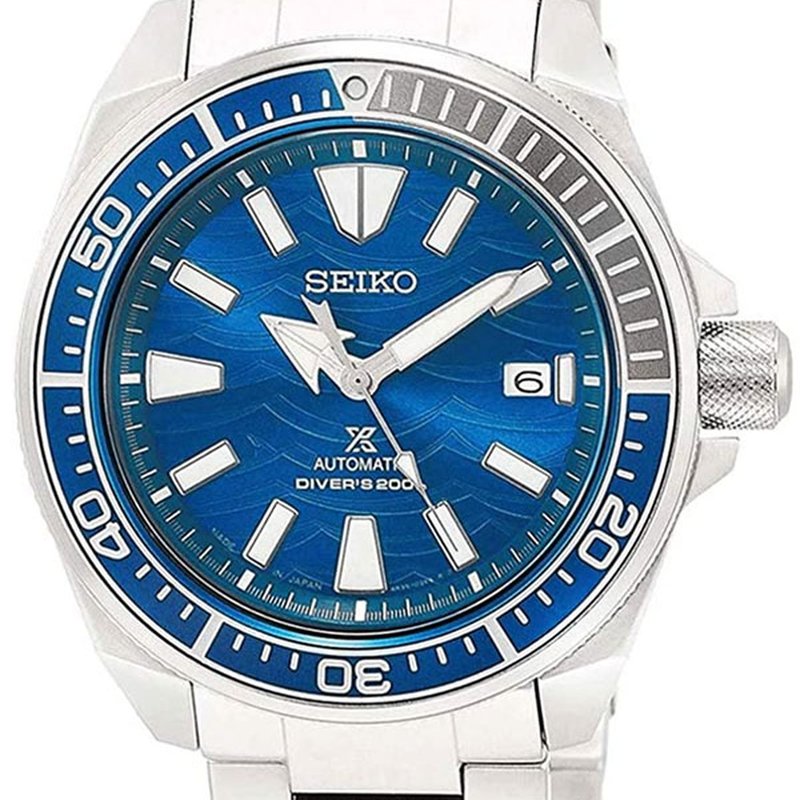
Great White Shark Samurai
SRPD23
Light Blue Wave Dial / Shark Fin - Cal. 4R35
Year: 2019
Save the Ocean Special Edition
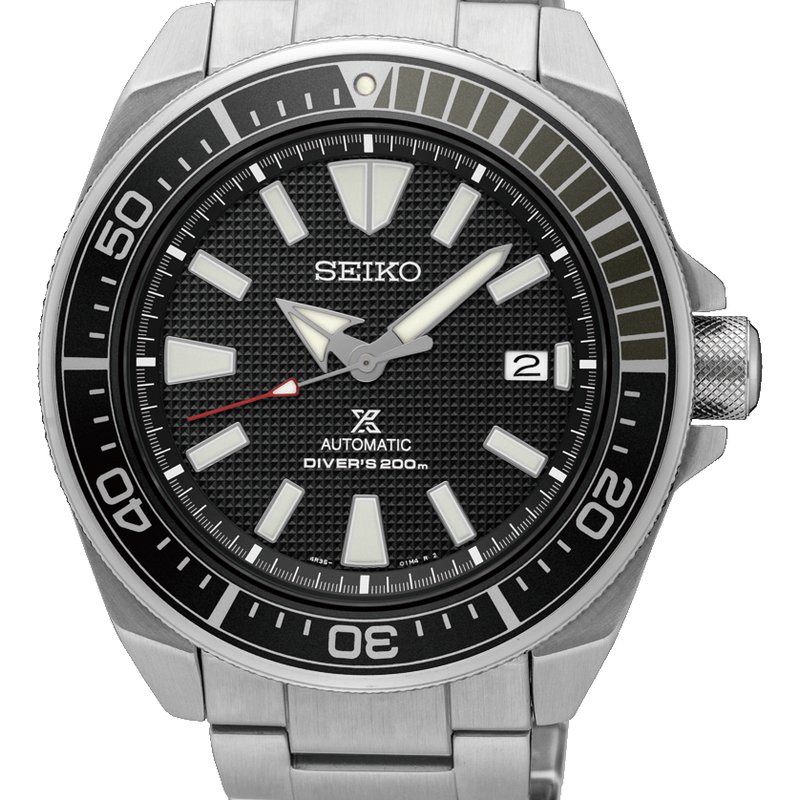
Black Samurai
SRPF03
Black Dial / Black-Grey Bezel - Cal. 4R35
Year: 2019
Re-numbered SRPB51; mechanically identical successor.
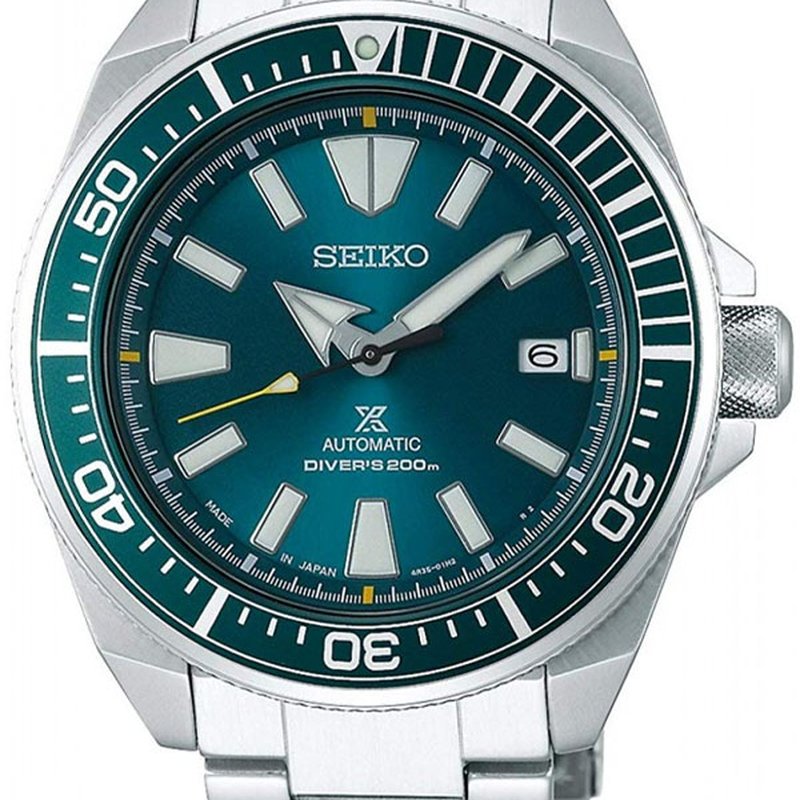
Green Hulk Samurai
SBDY043
Green Dial / Made in Japan - Cal. 4R35
Year: 2019
JDM Limited Edition
King Samurai / Third Generation (2020-2023)
Following the King Turtle and King Sumo precedent, late 2020 saw Seiko introduce the "King Samurai", a premium upgrade rather than a mechanical redesign. The 43.8mm case, 4R35 movement, and 200m water resistance all carry over from Gen 2.
Three changes define the King: an aluminium bezel insert is replaced by polished black ceramic; Hardlex is replaced by sapphire crystal with a date cyclops/magnifier; and case finishing is refined throughout. Visually the dial markers and bezel font are tightened, and the launch trio (SRPE33, SRPE35, SRPE37) sets the tone for the generation.
The King Samurai went on to host a wide run of regional limited editions: PADI variants (SRPG21, SRPJ93), the Save the Ocean Manta Ray pair (SRPE33, SRPF79), the Europe-only Shu-Iro (SRPH61) inspired by the Suigun naval forces, the Black Series Night Vision (SRPH97) with mint-green lume, and Zimbe and country-specific releases for Thailand and the Philippines.
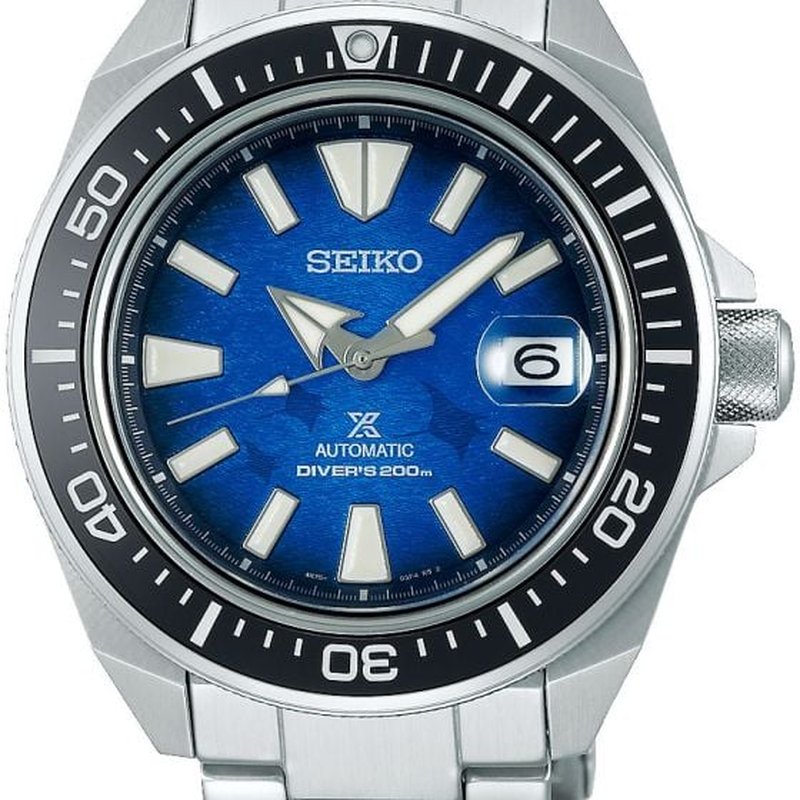
King Samurai Manta Ray
SRPE33
STO Manta Ray Sparkling Blue - Cal. 4R35
Year: 2020
Save the Ocean Special Edition
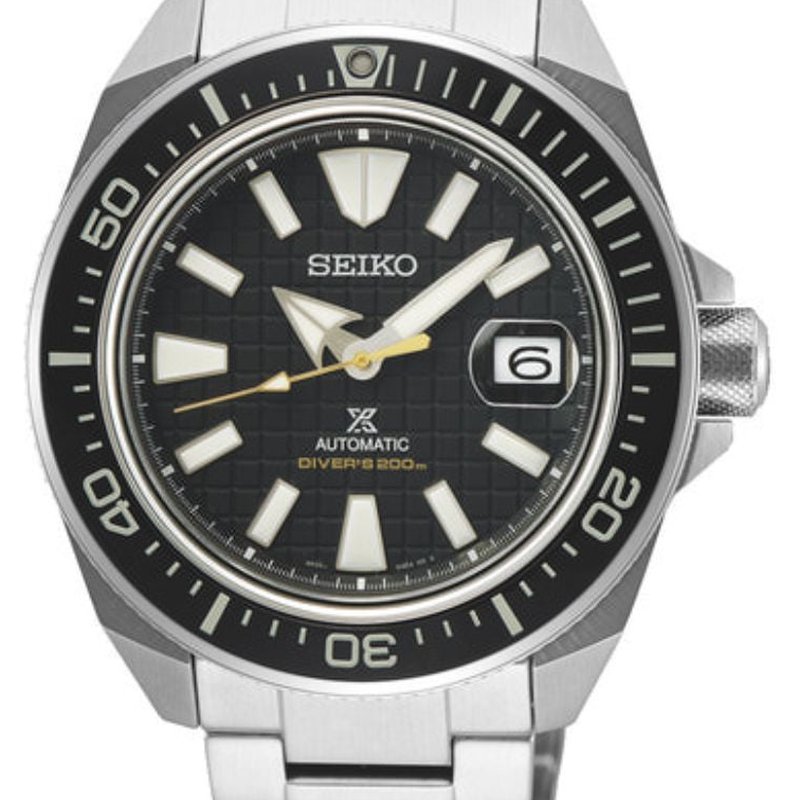
King Samurai Black
SRPE35 / SBDY065
Black Dial / Ceramic Bezel - Cal. 4R35
Year: 2020
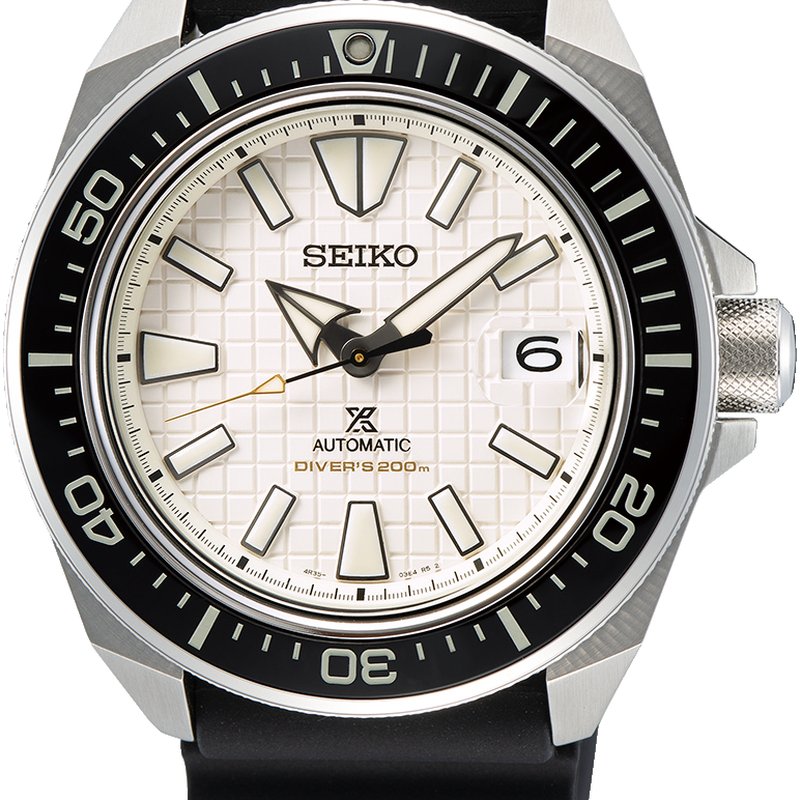
King Samurai White
SRPE37
White Waffle Dial - Cal. 4R35
Year: 2020
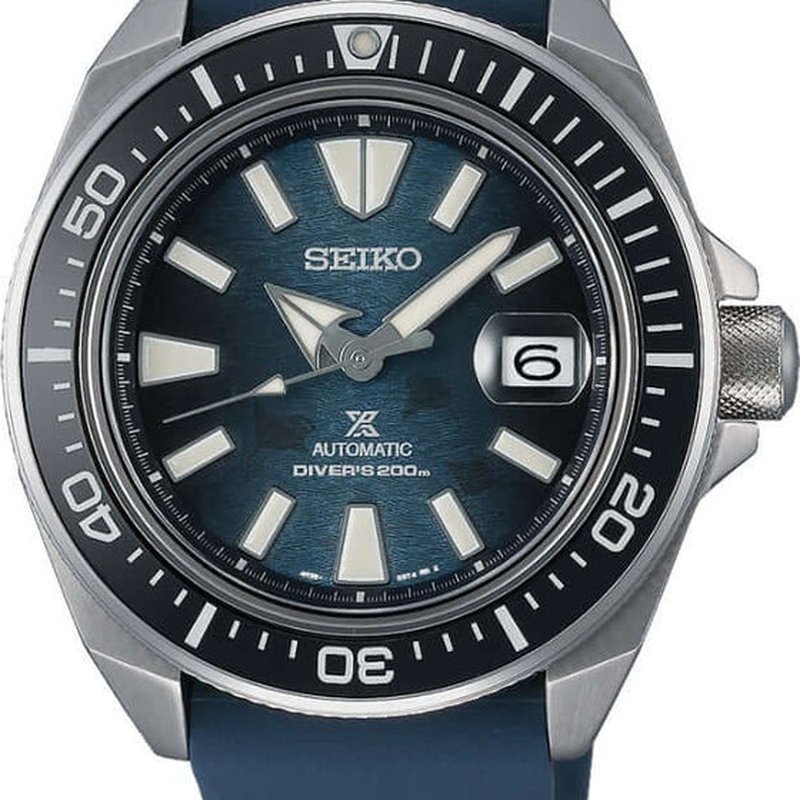
King Samurai Dark Manta Ray
SRPF79 / SBDY081
STO Deep Blue Gradient - Cal. 4R35
Year: 2020
Save the Ocean Special Edition
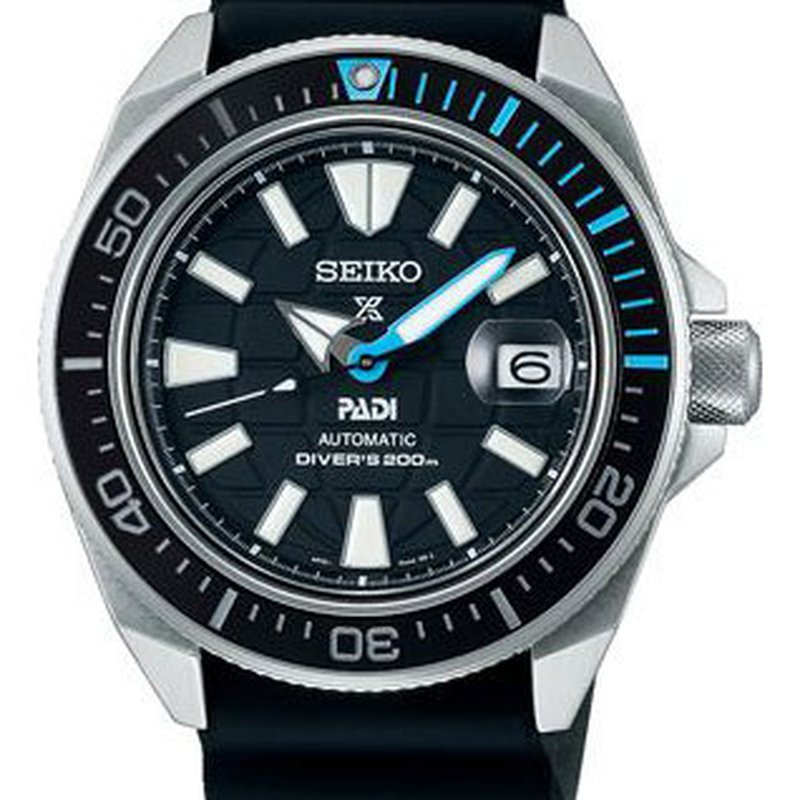
King Samurai PADI
SRPG21 / SBDY095
PADI Black/Blue Earth Dial - Cal. 4R35
Year: 2021
PADI Special Edition
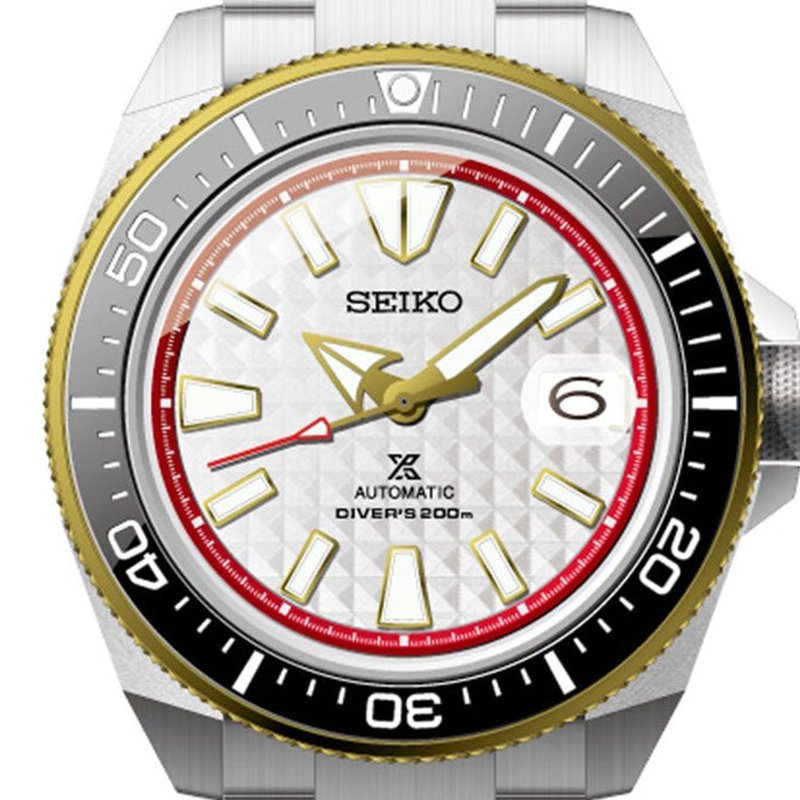
King Samurai Yak Wat Po
SRPH42
Sahatsadecha White Giant - Cal. 4R35
Year: 2021
Limited Edition - 995 pieces (Thailand 30th Anniversary)
White dial with red chapter ring and 3D pyramid pattern. Paired with SRPH44.
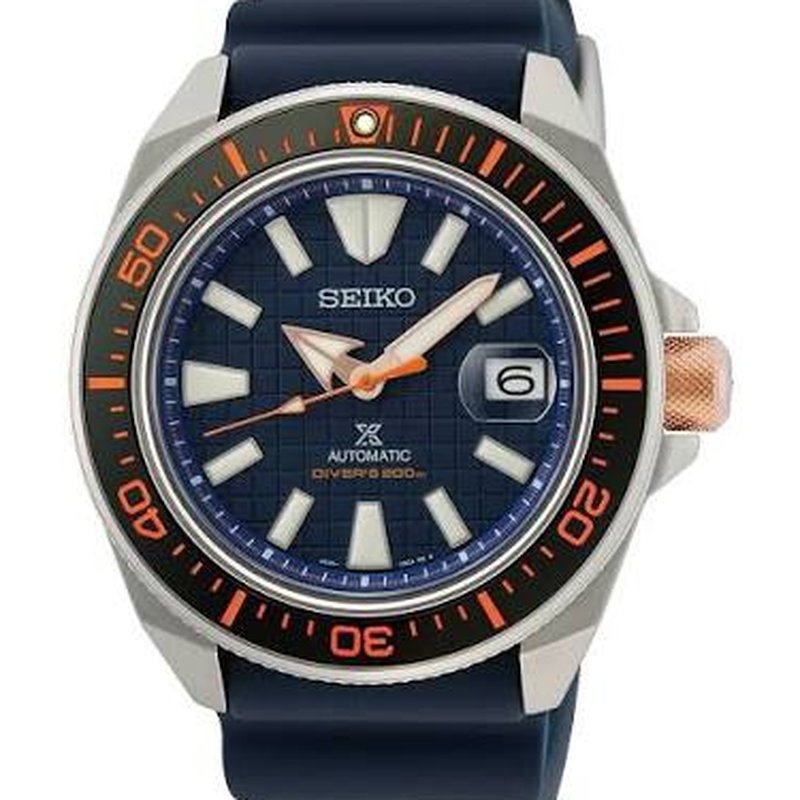
King Samurai Save the Ocean
SRPH43
Blue Textured Dial - Cal. 4R35
Year: 2021
Special Edition (Asia Exclusive)
Blue grid-textured dial with orange bezel accents, rose gold crown and hands, on blue silicone strap.
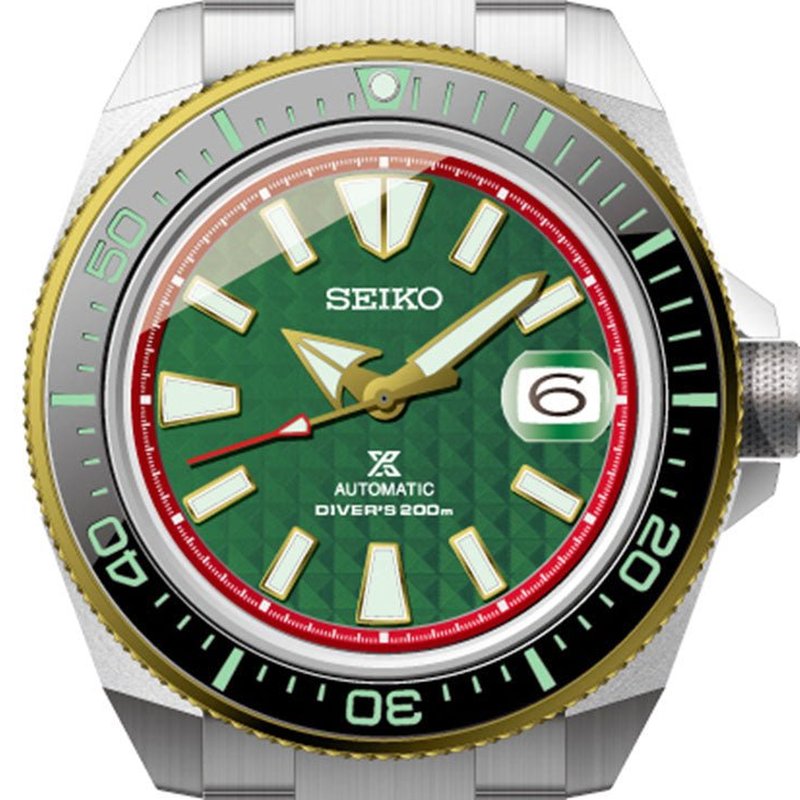
King Samurai Yak Wat Chang
SRPH44
Tosakan Green Giant - Cal. 4R35
Year: 2021
Limited Edition - 996 pieces (Thailand 30th Anniversary)
Green dial with red chapter ring and 3D pyramid pattern. Paired with SRPH42.
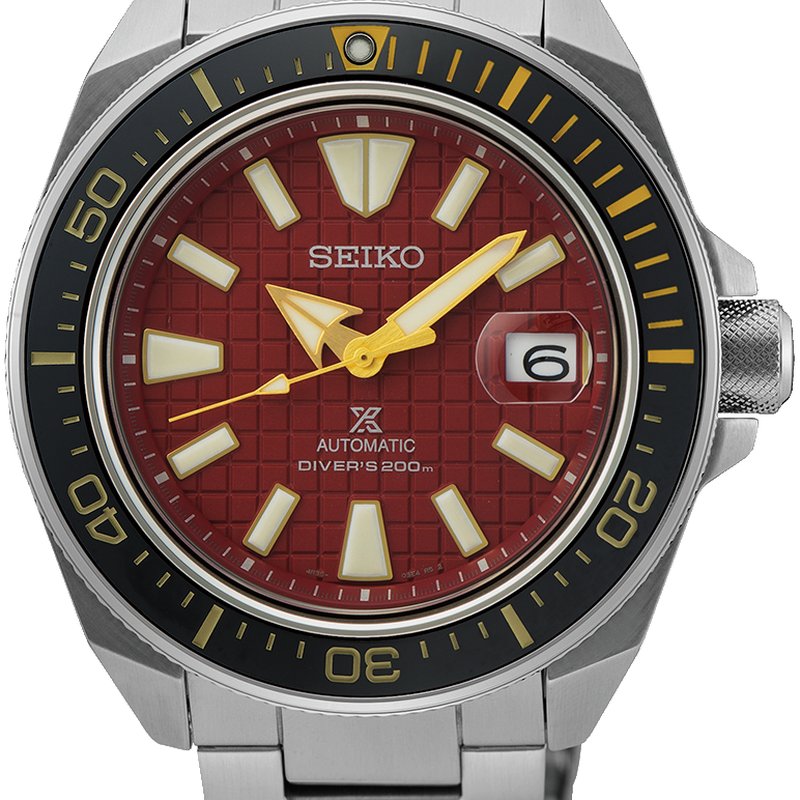
King Samurai Shu-Iro
SRPH61
Suigun Red - Cal. 4R35
Year: 2022
Europe Limited Edition
Inspired by the Suigun, Japan's traditional waterborne naval forces.
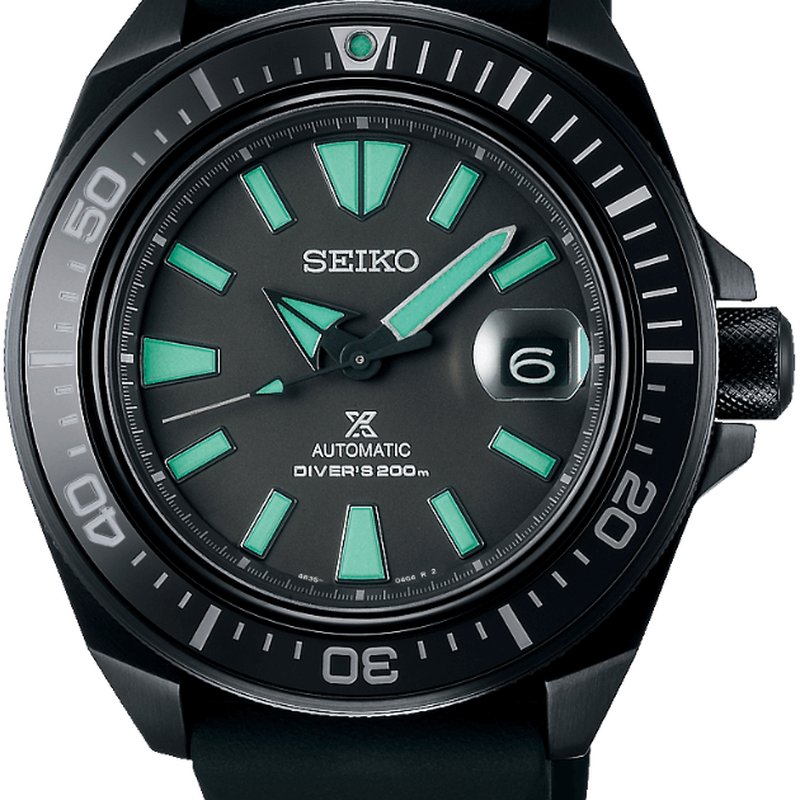
Black Series Night Vision
SRPH97 / SBDY119
Dark Grey / Mint Green Lume - Cal. 4R35
Year: 2022
Limited Edition - 8,000 pieces (Black Series)
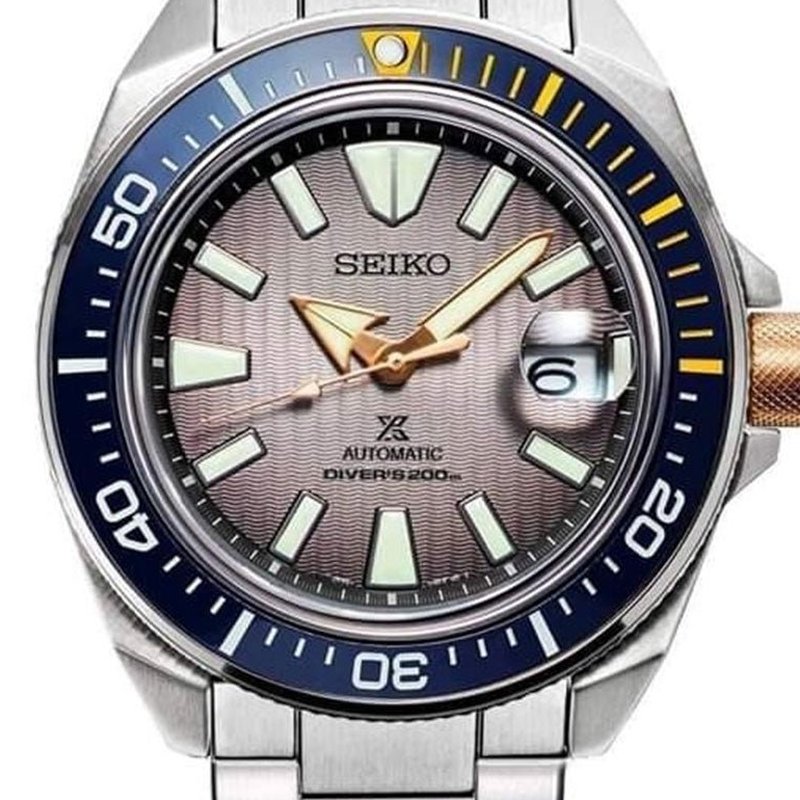
Zimbe No.17 King Samurai
SRPJ29
First Zimbe King Samurai - Cal. 4R35
Year: 2023
Limited Edition - 1,000 pieces (Thailand)
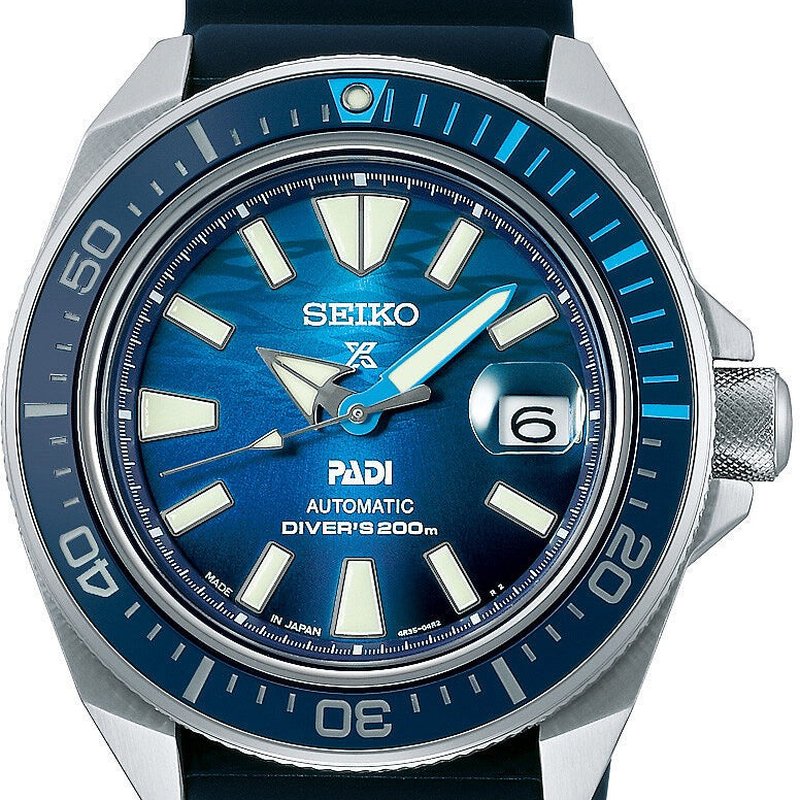
King Samurai PADI Great Blue
SRPJ93 / SBDY123
PADI Great Blue Gradient - Cal. 4R35
Year: 2023
PADI Special Edition
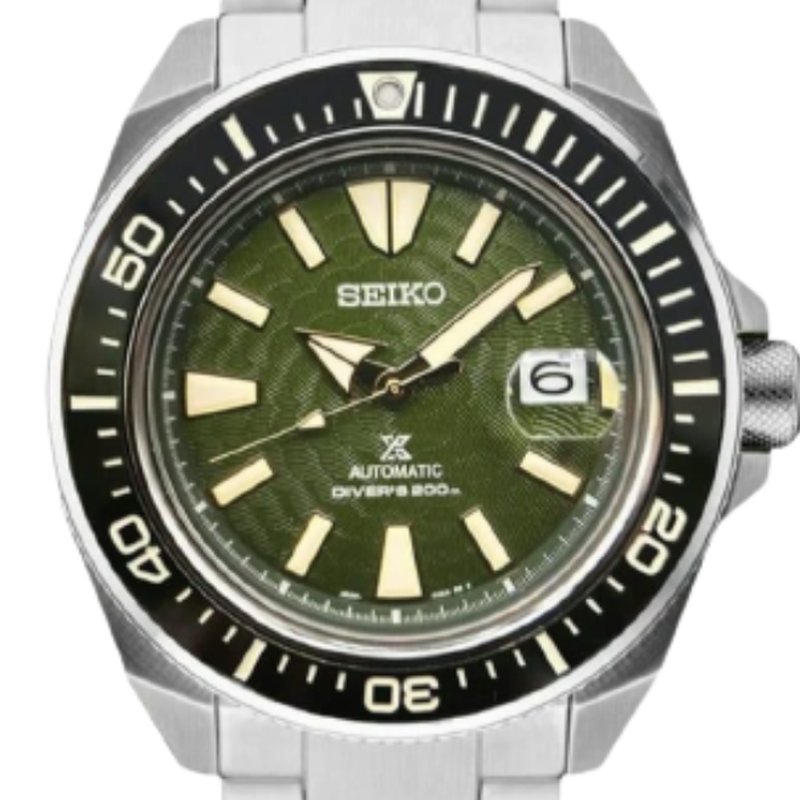
King Samurai Banaue
SRPK59
Banaue Rice Terraces - Cal. 4R35
Year: 2023
Philippines Limited Edition
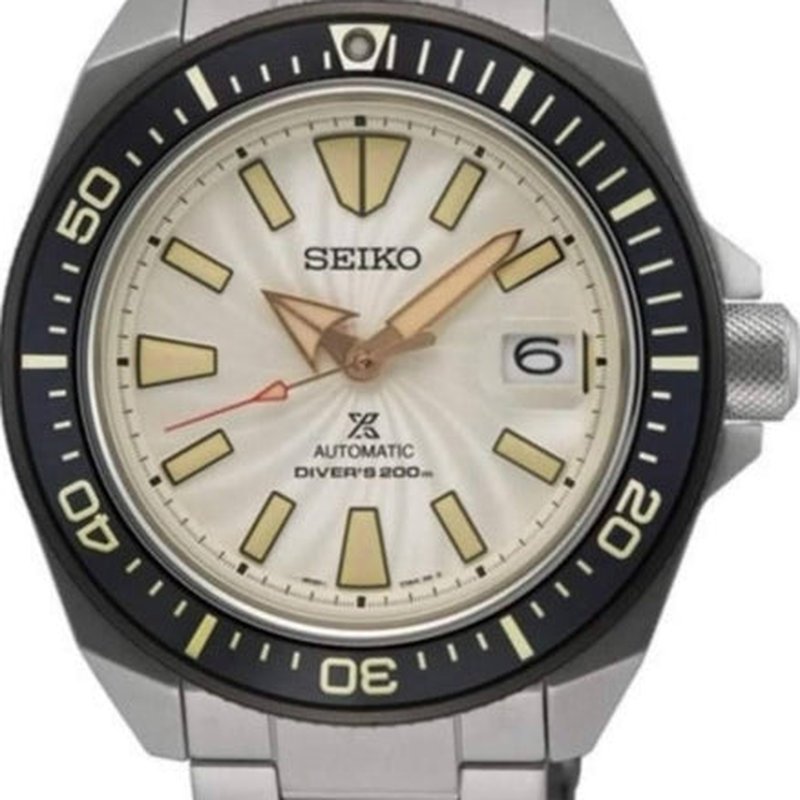
King Samurai White Elephant
SRPK57
White Elephant - Cal. 4R35
Year: 2024
Limited Edition - 1,500 pieces (Thailand)
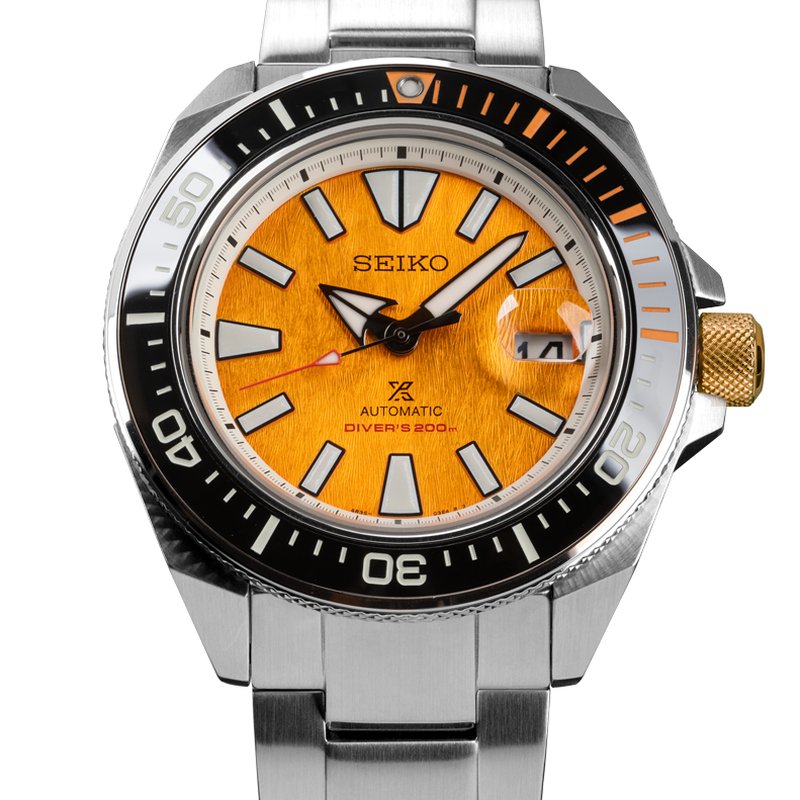
King Samurai Indian Tiger
HBB005
Tiger-Stripe Amber Dial - Cal. 4R35
Year: 2026
India Limited Edition - inspired by the Indian tiger
Samurai Fourth Generation (2024-Present)
Marking the Samurai's 20th anniversary in 2024, Seiko introduced its most significant redesign since 2017. The case shrinks to 41.7mm × 12.3mm × 49.5mm lug-to-lug (down from 43.8mm), with much more tapered, slimmer lugs in direct response to long-standing complaints about the prior generation's wrist presence.
The hands are redesigned again. They are not a literal return to the Gen 1 swords, but a clear step in that direction from the Gen 2/3 arrow handset, and fully filled with LumiBrite. The ceramic bezel of the King generation is dropped in favour of a return to aluminium inserts, and Hardlex replaces sapphire on the standard models, repositioning the line as a more accessible, everyday-wearing diver while the King remains the premium option. The 4R35 movement carries over unchanged.
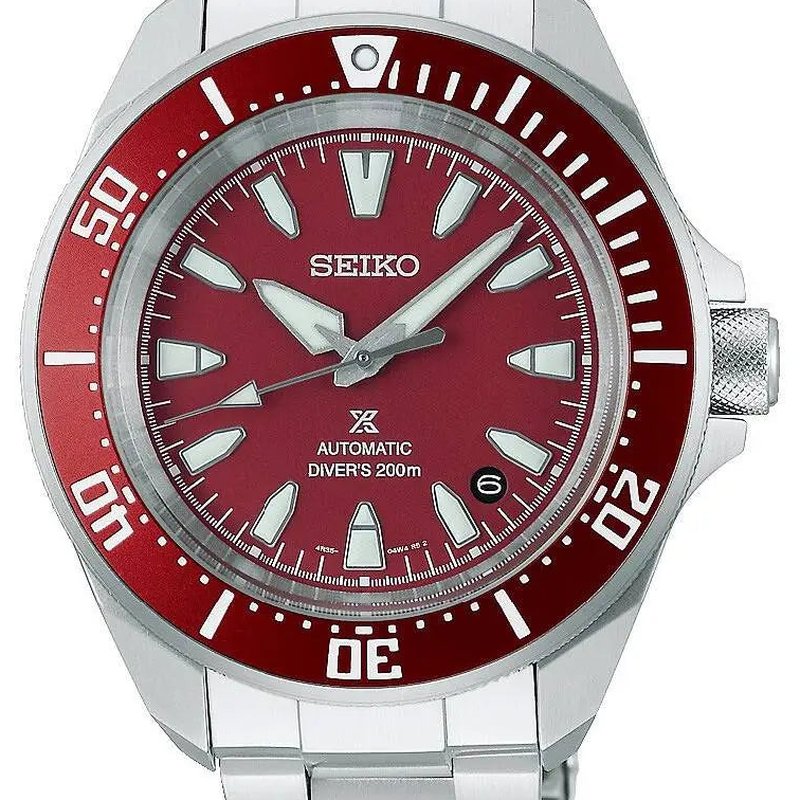
Burgundy Samurai
SRPL11 / SBDY129
Burgundy Red Dial / Bezel - Cal. 4R35
Year: 2024
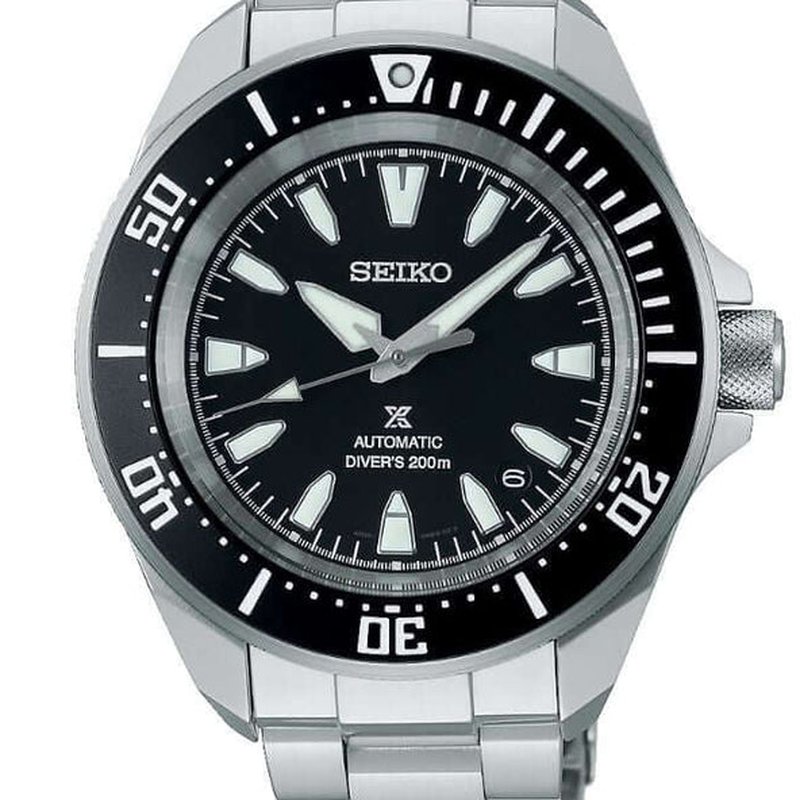
Black Samurai
SRPL13 / SBDY131
Black Dial / Black Bezel - Cal. 4R35
Year: 2024
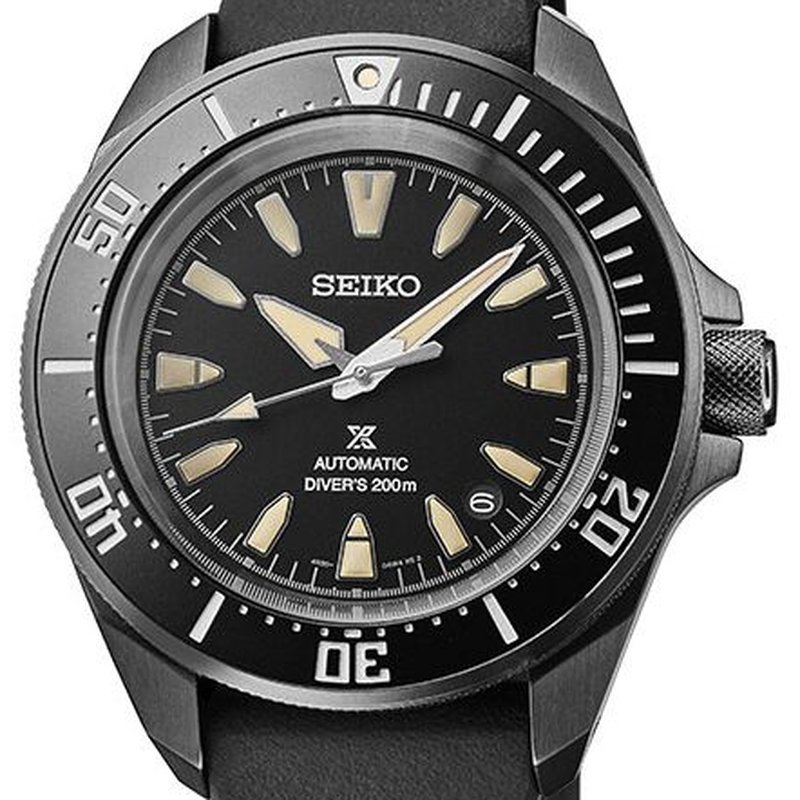
Stealth Black Samurai
SRPL15 / SBDY133
Black-Coated Case / Vintage Lume - Cal. 4R35
Year: 2024
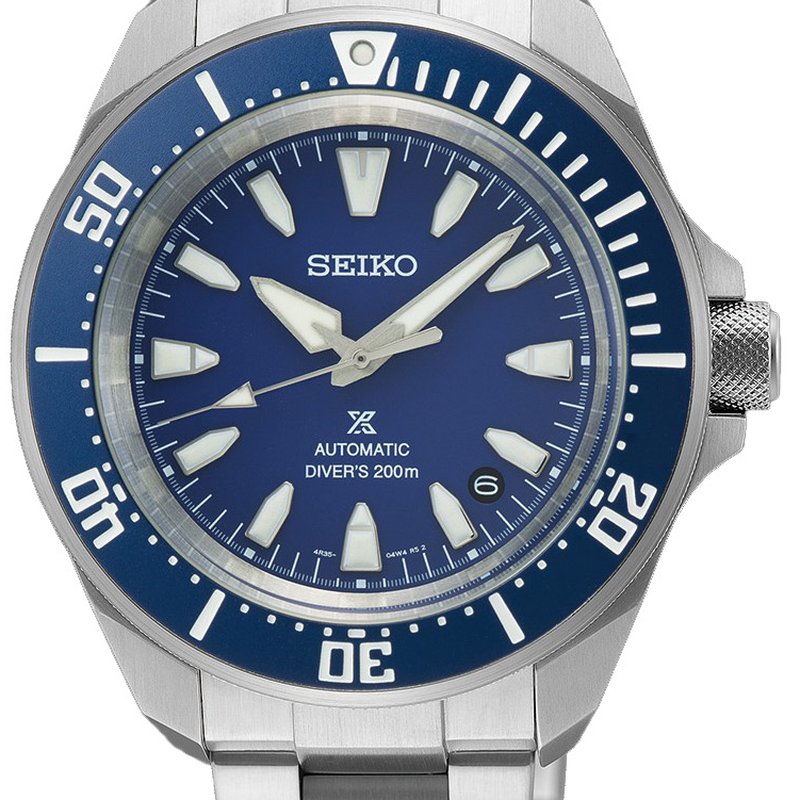
Blue Samurai
SRPL51
Matte Blue Dial / Metallic Blue Bezel - Cal. 4R35
Year: 2025
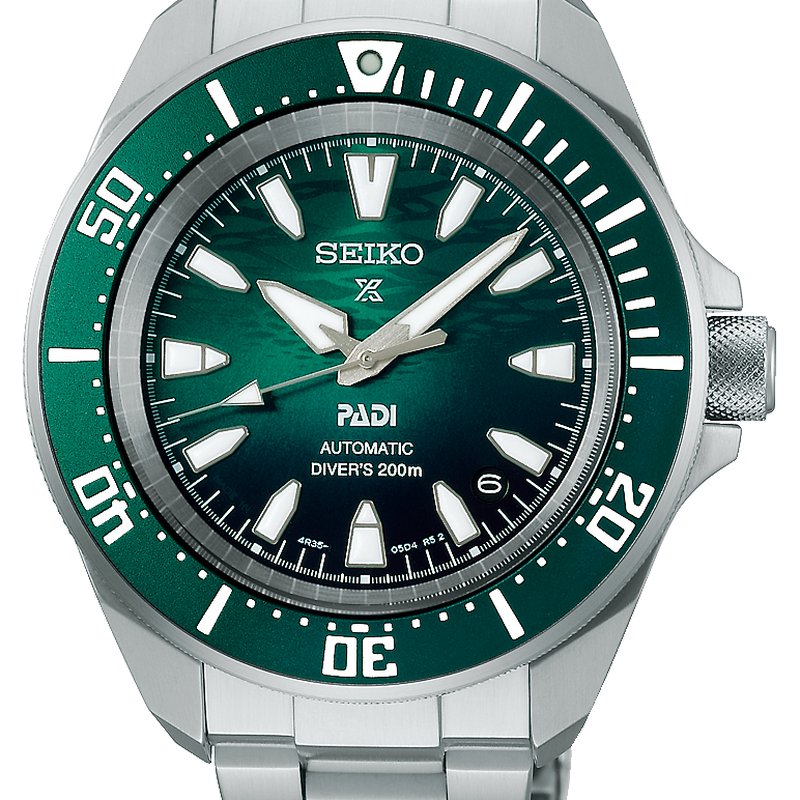
Green PADI Samurai
SRPL53
Green Dial / PADI Special Edition - Cal. 4R35
Year: 2025
PADI Special Edition
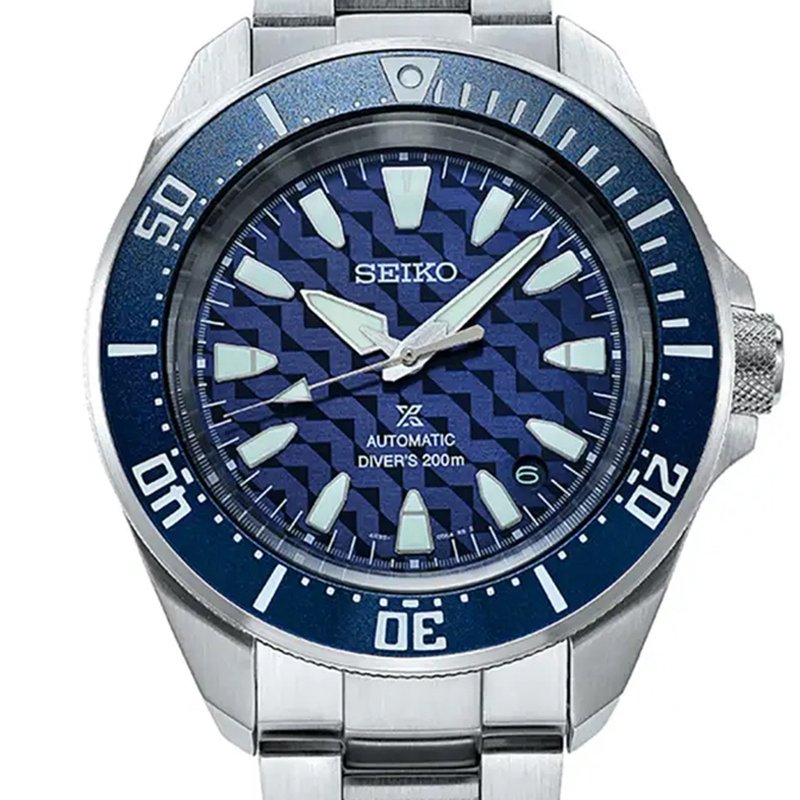
Samurai PDM Stride
SRPM03
Navy Blue Stride Pattern Dial - Cal. 4R35
Year: 2025
Limited Edition - 500 pieces (Thailand)
Collaboration with Thai brand PDM (Product Design Matters); dial features Finnish designer Sini Henttonen's award-winning Stride pattern.
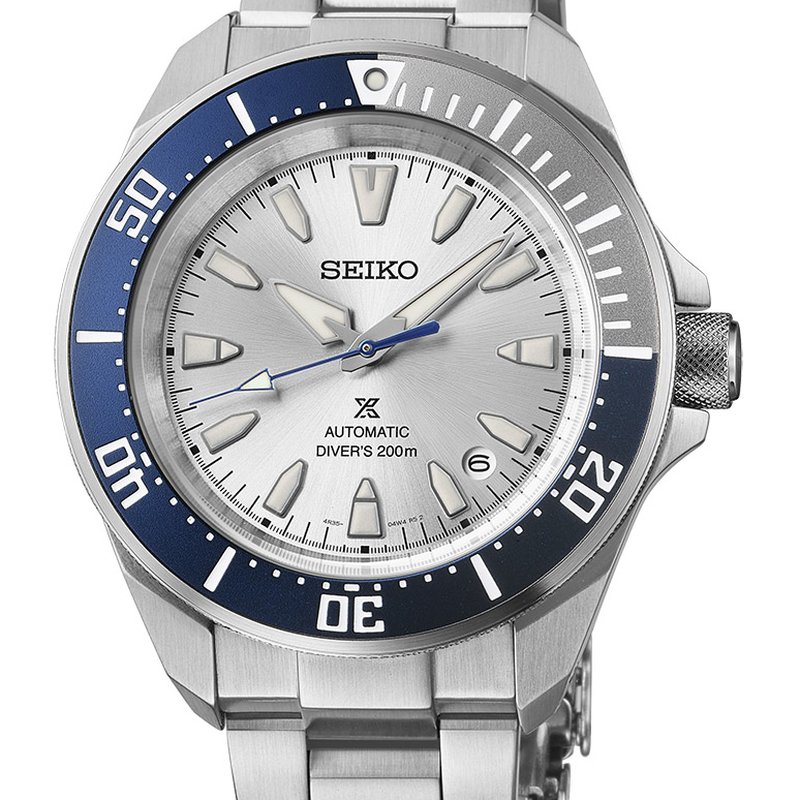
Samurai 145th Anniversary
HBB001
Silver Sunburst Dial / Seiko Blue Bezel - Cal. 4R35
Year: 2026
Limited Edition - 9,999 pieces
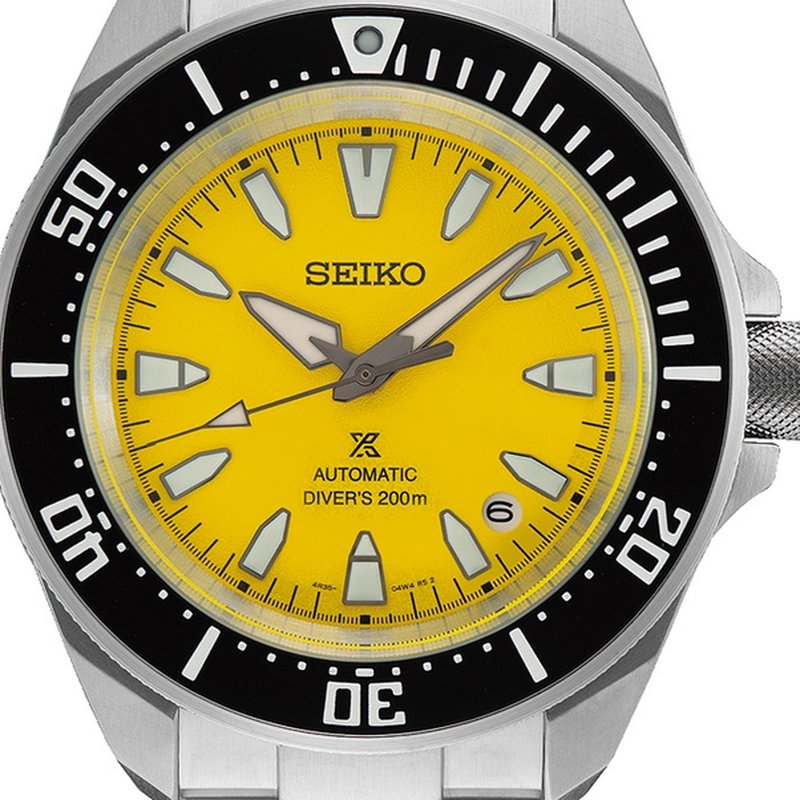
Mini Samurai Yellow
HBB003
Sand-Textured Yellow Dial - Cal. 4R35
Year: 2026
Limited Edition - 2,500 pieces (Asia-Pacific exclusive)
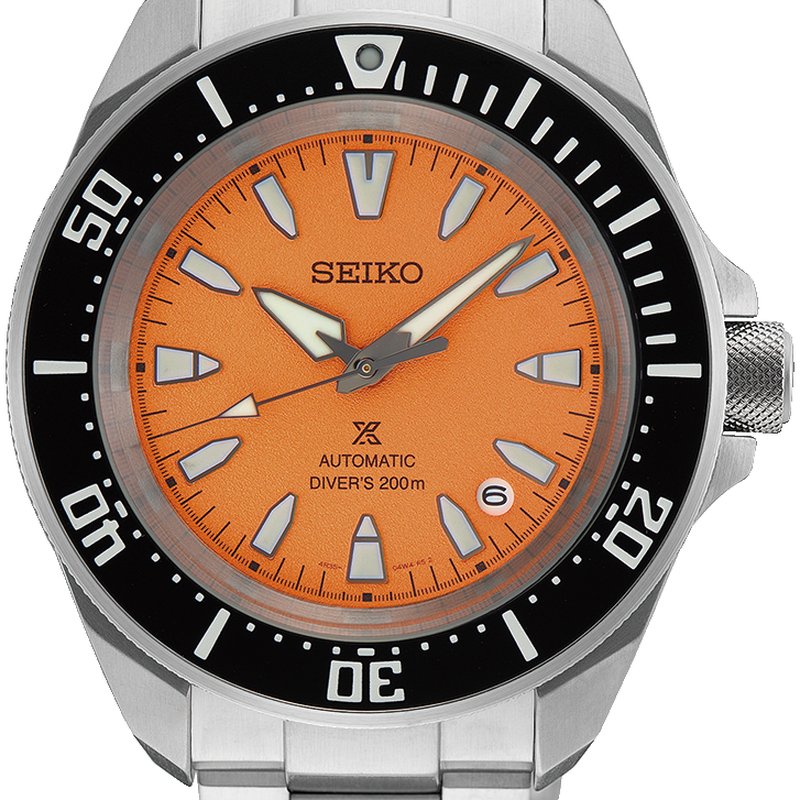
Mini Samurai Orange
HBB004
Sand-Textured Orange Dial - Cal. 4R35
Year: 2026
Limited Edition - 2,500 pieces (Asia-Pacific exclusive)